Sometimes you know something needs to change long before you know exactly what that change should be.
It may not be anything dramatic. Your life might be working reasonably well. You’re meeting your responsibilities, taking care of what needs to be done, and keeping things moving.
But somewhere along the way, you begin to wonder whether everything you’re doing still makes sense for the life you want now.
Maybe you’re giving too much time to things that no longer matter as much. Maybe you’ve become so accustomed to saying yes that you rarely stop to consider what those yeses are costing you. Maybe you’ve accumulated possessions, responsibilities, or expectations that belonged to an earlier chapter of your life.
Or maybe you’re simply curious about what could be different.
You don’t have to know exactly what you want to change. Sometimes the first step is simply taking a closer look at how your life is working now.
A Different Way to Look at the Life You’ve Built
The Second Build Press was founded on a belief that shapes everything we create: No one else gets to decide how you should live your life.
It’s easy to offer advice when you haven’t lived through the circumstances that shaped someone else’s choices.
Every person brings a different history to the decisions they make. Experiences, responsibilities, relationships, hardships, and circumstances that may be invisible to others can profoundly influence how someone approaches life, responds to challenges, or determines what matters.
What looks like a simple decision from the outside may be far more complicated for the person living with its consequences.
That’s why The Second Build Press doesn’t begin with the assumption that there’s one correct way to live, one ideal outcome to pursue, or one set of answers that applies to everyone.
Instead, we approach everyday life through practical, operational frameworks.
Over time, we build systems around how we live. We establish routines, accept responsibilities, develop patterns, accumulate possessions, and create expectations. Many of these arrangements began for good reasons, under circumstances that made sense at the time.
But circumstances change. Priorities shift. And the systems we’ve built don’t always change with us.
The Second Build Press provides frameworks for examining those systems—not instructions for how your life should look.
Where are your resources going? What responsibilities have become automatic? What patterns keep repeating? What are you maintaining simply because you’ve always maintained it?
These questions aren’t intended to produce the same answers for everyone.
They’re intended to help you understand how your own life operates, evaluate what still makes sense within your circumstances, and decide for yourself what, if anything, you want to approach differently.
Your experiences are your own. Your circumstances are your own. And the decisions about your life should remain your own.
The following four complimentary resources offer different starting points for that process.
1. We Built Our Own Table — The Story Behind The Second Build Press
A complete complimentary memoir
Before there were frameworks, workbooks, or systems, there was a life being lived.
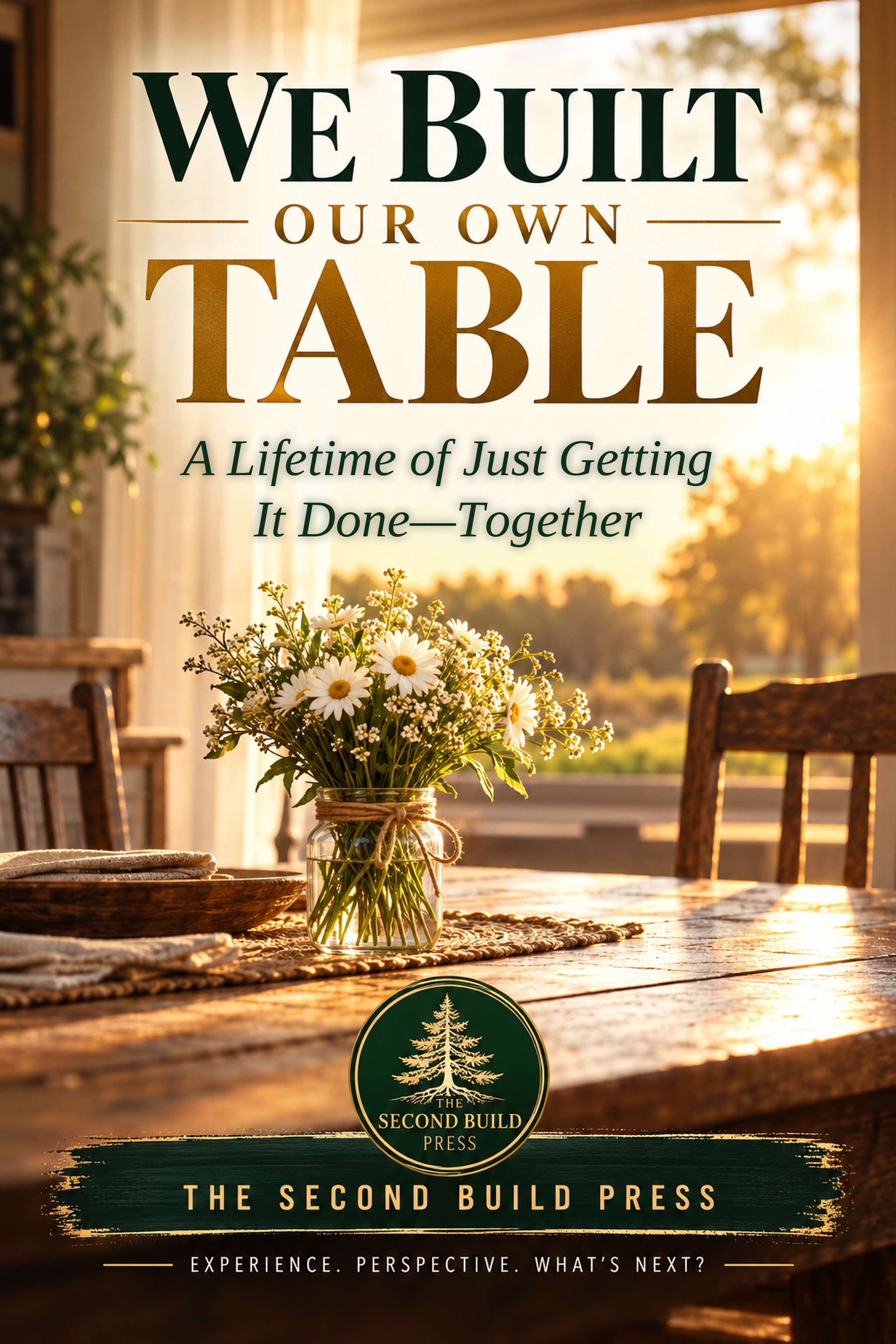
We Built Our Own Table: A Lifetime of Just Getting It Done—Together is the personal story at the foundation of The Second Build Press.
It’s a memoir about difficult beginnings, building a life together, raising a family, working through challenges, and doing what needed to be done—even when there wasn’t a clear roadmap.
It’s also about the perspective that comes from looking back at the life you’ve built and recognizing how much of it was shaped by necessity, persistence, responsibility, and the decisions you made along the way.
The Second Build Press grew from that perspective.
Not from having all the answers, but from understanding how easily we can spend years managing the lives we’ve built without stopping to consider what we might approach differently.
This is the complete memoir, not an excerpt or sample.
Start here if: You want to understand the experience and perspective behind The Second Build Press before exploring its practical frameworks.
Read the complimentary memoir, We Built Our Own Table →
2. Clear the Space — Reconsider What You’re Carrying Forward
Complimentary Introduction and Chapter One preview
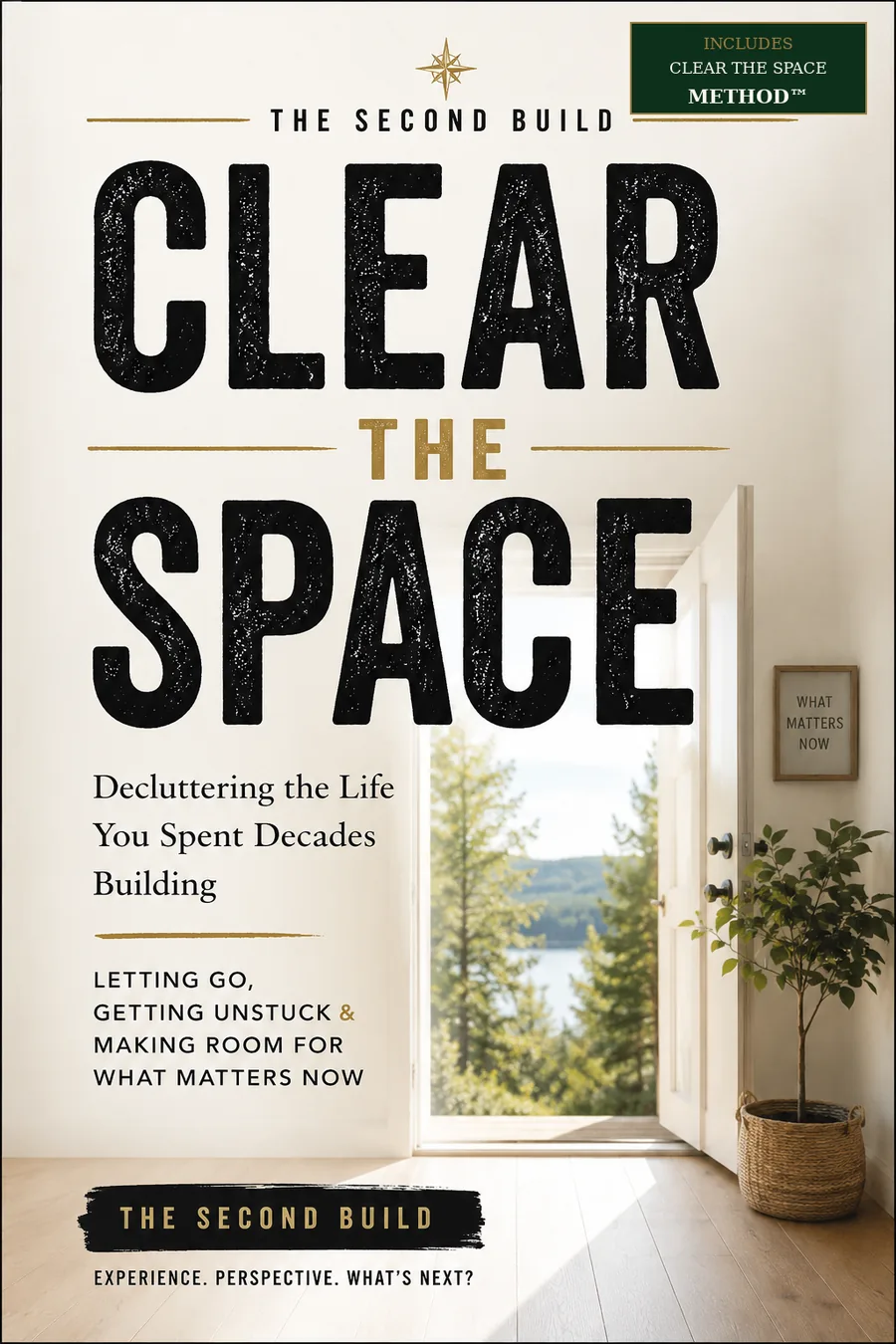
Clear the Space: Decluttering the Life You Spent Decades Building is the flagship book of The Second Build Press.
Although the idea began with decluttering, the book evolved into something much broader.
Over the course of a lifetime, we accumulate far more than possessions. We accumulate the memories attached to them, the responsibilities of maintaining them, the expectations surrounding them, and the emotional connections that make some things difficult to reconsider.
An object may represent a person, a period of our lives, an accomplishment, a sacrifice, or a responsibility we once accepted. What looks unnecessary to someone else may hold considerable meaning for the person who owns it.
That’s why Clear the Space isn’t about following a set of rules for what to discard or how much you should own.
It’s about understanding what you’re holding on to, why you’re holding on to it, and what place it still has in your life.
Some things may no longer serve a purpose. Others may be worth keeping for reasons that have nothing to do with their practical usefulness.
The Clear the Space Method™ provides a framework for examining those distinctions without assuming that letting go is always the right answer.
The complimentary preview includes the Introduction and complete first chapter, allowing you to explore the book’s perspective before deciding whether you’d like to read further.
Start here if: You’re reconsidering the things you’ve accumulated over time and want to better understand their meaning, their obligations, and whether they still belong in the life you’re building now.
Explore Clear the Space — click “Preview” on the book listing →
3. Where Is Your Life Going? — Examine How Your Resources Are Being Used
Complimentary sample from The Second Build Priority Audit
Most of us can describe what matters to us.
But if we looked closely at where our time, energy, attention, and money actually go, would the picture match?
Where Is Your Life Going? is a complimentary fillable workbook sample drawn from The Second Build Priority Audit.
It introduces a structured way to examine the resources you’re using to keep your life operating.
Your calendar may be full. Your responsibilities may be getting handled. You may be doing everything you’re supposed to do.
But that doesn’t necessarily mean your resources are being directed toward the things that matter most to you now.
This sample gives you a starting point for looking at that difference.
The purpose isn’t to judge how you’ve spent your time or tell you what your priorities should be. It’s to make the allocation of your resources more visible so you can evaluate it for yourself.
Start here if: You feel busy or stretched, or you’re wondering whether your time and energy are going where you actually want them to go.
Explore the complimentary Where Is Your Life Going? →
4. What’s Your Yes Pattern? — Recognize What’s Driving Your Decisions
Complimentary sample from The No List
Not every yes is a deliberate decision.
Sometimes we agree because we feel guilty. Sometimes we’re afraid of disappointing someone. Sometimes it’s simply a habit. And sometimes saying yes has become part of how we see ourselves.
Over time, those automatic responses can create ongoing responsibilities and expectations that we never consciously intended to establish.
What’s Your Yes Pattern? is a complimentary fillable workbook sample drawn from The No List.
It introduces four common patterns behind automatic agreement: guilt, fear, habit, and identity.
Through a short self-audit, it helps you begin identifying which influences may be shaping your decisions.
The point isn’t to stop being helpful, generous, or dependable.
It’s to recognize the difference between a responsibility you’ve deliberately chosen and one you’ve continued accepting without reconsidering it.
Start here if: You regularly agree to things you later regret, or you’ve become the person everyone depends on without being sure how that happened.
Explore the complimentary What’s Your Yes Pattern? →
Why Frameworks Instead of Advice?
There’s no shortage of advice about how people should simplify their lives, set boundaries, become more productive, or find fulfillment.
But advice often begins with someone else’s idea of what the outcome should be.
The Second Build Press begins somewhere else.
We look at the operating structure of everyday life.
A responsibility has a cost in time and capacity. A recurring commitment consumes resources. A pattern of saying yes creates expectations. An accumulation of possessions requires space and maintenance.
These aren’t necessarily personal failures or problems that need fixing. They’re parts of a life that may have developed gradually, often for perfectly reasonable reasons.
But anything that has become part of your life’s operating structure can be examined.
That’s the purpose of an operational life framework: to help you identify what’s happening, understand what it’s requiring from you, and decide whether the current arrangement still works.
You may choose to change something. You may choose to keep it exactly as it is.
The decision remains yours. The framework helps you make it with greater clarity.
You Don’t Have to Rebuild Everything
Recognizing that something could work differently doesn’t mean your entire life needs to change.
You might identify one responsibility that needs reconsideration. One pattern you’d like to interrupt. One area where your resources are being stretched too thin. Or one possession, commitment, or expectation that no longer serves the purpose it once did.
Sometimes a small adjustment changes more than you expect.
And sometimes examining a part of your life confirms that it’s exactly where you want it to be.
Both outcomes are useful.
The Second Build Press was born from the perspective of midlife, but its frameworks aren’t limited to any particular age or stage of adulthood.
You don’t need decades of hindsight before you’re allowed to question how something works.
And you don’t need a crisis before you’re allowed to approach something differently.
Start With the Question That Matters to You
These four complimentary resources aren’t steps in a required sequence.
The memoir offers the experience and perspective behind The Second Build Press. Clear the Space introduces the approach of our flagship book. The two workbook samples offer practical opportunities to examine priorities and decision-making patterns.
You can begin with whichever resource speaks to you.
And if you decide you’d like to explore a particular area more deeply, the full Second Build Press catalog includes books, fillable workbooks, and operational life frameworks designed to support that process.
You don’t need someone else to tell you how your life should look. You need the perspective and tools to decide what works for you.